
Public safety
AI safety and liability questions fill a council hearing
Witnesses disagreed less about the technology than about who pays when it fails.
Society desk
Commemorations, public gatherings, and the community debates that follow. We follow how people respond to events — the vigils, the council chambers, the arguments that run long after the cameras leave.
Reporting from Oct. 7
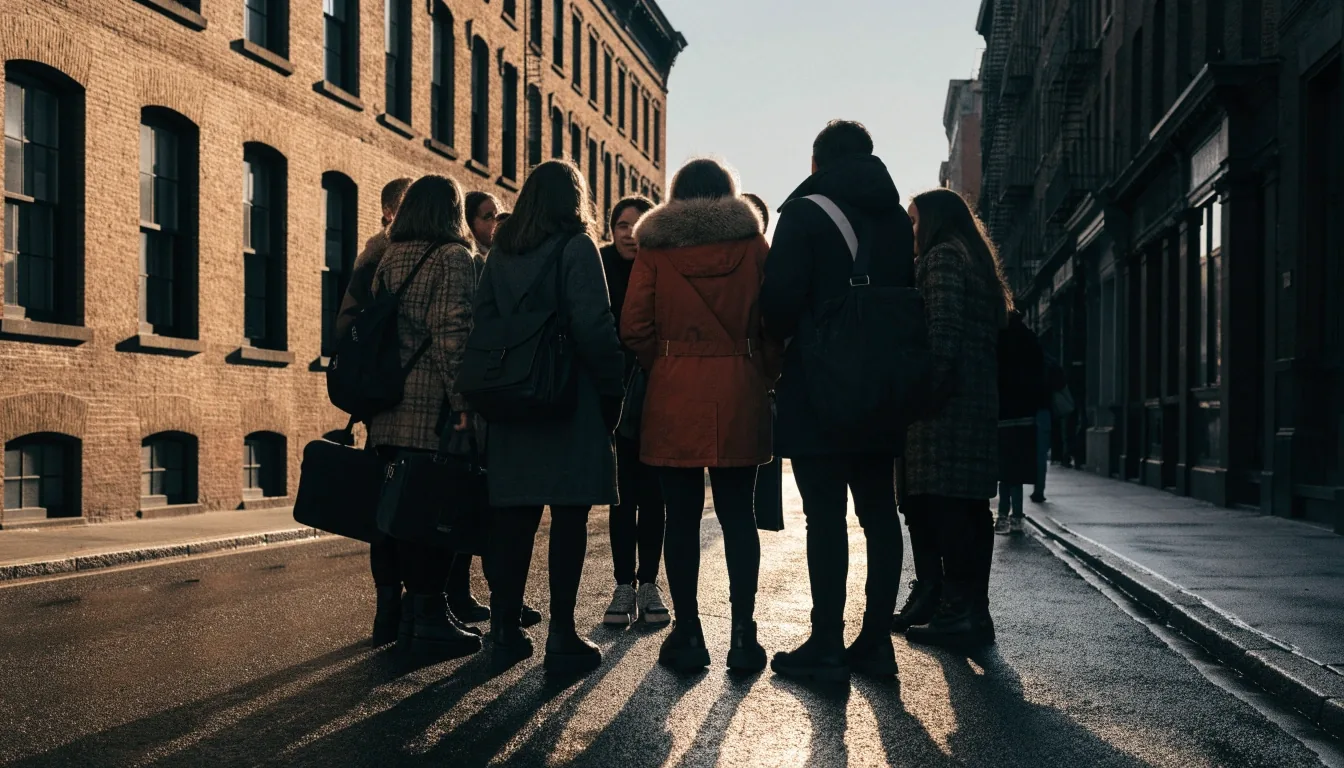
New York spent the anniversary of the Oct. 7 attacks in two registers at once. Mourning services filled the morning. By the afternoon, marches were moving through Midtown, and the two crowds were close enough that police held a corridor between them. Our reporting follows the families, the organisers, and the officers who spent a long day managing proximity.
Read the Oct. 7 report on the anniversary in New York CityWhat this desk does
A council meeting that runs until midnight, a vigil on a stoop, a school board arguing over a reading list, a neighbourhood staging a block party to keep a storefront open — these are the units we work in. Society coverage is not the mood around an event. It is the event's mechanics: who showed up, who spoke, what was decided, what got postponed, and who left unsatisfied.
We publish on what can be seen and confirmed. Attendance, agenda items, votes taken, permits filed, and the language people actually used are recorded. Where a claim is contested, both versions run with the same weight until the record settles it.
Anniversaries, memorials, and the way a city keeps a date it cannot forget.
Marches, vigils, town halls, and the logistics behind them — permits, routes, turnout.
The arguments that split a block, a district, or a borough — and how they end.
A routine zoning vote turned into a three-hour argument about power use, water, and who gets consulted. Residents on both sides left with different ideas about what had just happened.
Local government
Open the storyTwo threads keep surfacing in the mail and at the public meetings we attend: who gets a say when infrastructure arrives, and what the city owes people when the decision goes the other way.
Public safety
Witnesses disagreed less about the technology than about who pays when it fails.
City services
Cameras on sidewalks raise the same question every time: notice, consent, and who reviews the footage.
Opinion
Polling tells one story, the meeting rooms tell another. We keep both in view.
Society stories live or die on detail. The number of people who actually stayed past the speeches. The exact wording of a resolution that got amended twice. The name of the shop owner who has been to every meeting for nine years and still has not been heard. We keep the long read in the same desk as the brief, because a commemoration and the fight over its funding are one story.
A short letter once a week: what moved in society reporting, what we are still chasing, and which meeting is likely to matter next. No account required, one click to leave.
Join the newsletterWhere the stories come from
Community meetings attended
Council, board, precinct, and park
Commemorations followed
Vigils, anniversaries, and memorials
Public gatherings reported
Marches, rallies, and town halls
Neighbourhood disputes tracked
Zoning, noise, licensing, and land use
Standards
Society reporting raises a question that beats and agencies do not: when a story is about a neighbourhood, who gets to speak for it? These are the answers we work with, updated whenever our practice changes.
Read the standardsYes. When a factual error is confirmed — a misspelled name, a wrong vote count, a misstated date — we amend the story and add a dated correction line at the foot of it. Corrections to society pieces often arrive from the people at the meeting, which is exactly the point of covering them closely.
We name organisers, speakers, and officials who appear in a public capacity. We do not name bystanders, and we do not publish photographs of people at vigils or memorials without permission. If you attended an event and would rather not be included, write to the desk and we will review the piece.
We follow debates with a decision attached: a vote, a permit, a budget line, a contract, a lease. Arguments that only exist online are covered when they move into a room with a gavel in it. That filter is why our society coverage reads slower than a feed and, we think, ages better.
Use the contact page and tell us the date, place, and what is likely to be decided. If you have documents, say so in the first message and we will reply with a safer way to send them. We read everything, even when we cannot cover it.
Follow the desk through the archive, browse the section index, or send us the meeting we have not heard about yet. We answer every message that includes a date and a place.