Outdoor utility cabinets and pole-mounted sensors along an access road at dawn, raking warm light

Technology · Thursday, October 8, 2026

Torch Systems Secures $11.5 Million to Expand AI Monitoring for Outdoor Infrastructure

The New York-based sensing company says the funding will widen its field network of cameras and edge processors that watch bridges, poles and roadside cabinets for damage — starting in the states where it already runs hardware.

Total funding
$11.5M
Devices in field
Hundreds
Coverage
Sensors running across several U.S. states
Headquarters
Brooklyn, New York

Figures above are the company's stated totals. Torch Systems did not publish a per-investor breakdown, and the round's structure — equity, notes or a mix — has not been disclosed in the announcement materials this desk has reviewed.
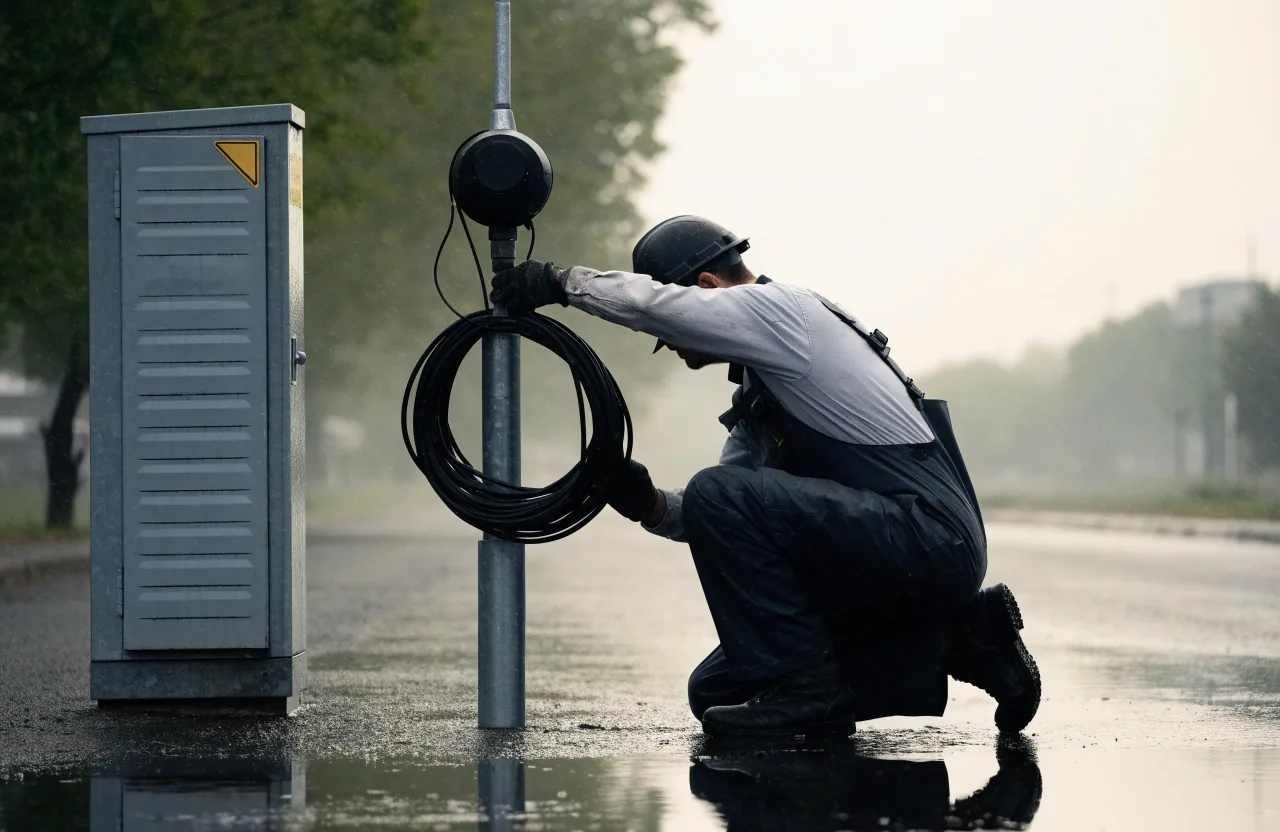
Sensors that watch the parts of a city nobody photographs

Utility poles, highway gantries, loading docks and rail catenary are replaced on inspection cycles that can run for years. Torch Systems sells the opposite bet: leave a camera and a small processor on the structure, and let software compare today's condition against yesterday's.

That approach is why the funding number matters less than the deployment footprint. The company says its devices are already mounted on outdoor assets in several states, which puts it past the demo stage and into the unglamorous work of keeping hardware alive through weather, vandalism and power loss.

Technician's gloved hands mounting a weatherproof camera housing on a steel pole bracket
Field install — housing bracket and cable run

What the hardware has to survive

Sustained sun and freeze-thaw cycling that warps cheap mounts and clouds lens covers.

Power that disappears — most roadside cabinets have no dedicated circuit, so devices run on battery or solar trickle.

Connectivity gaps. A camera on a rural gantry may only reach a network for a few minutes a day.

Physical wear from road spray, salt, dust and the occasional impact that never gets reported.

Elevated highway gantry at first light with a small camera housing clamped to the near beam

The case for looking at infrastructure more often

Most defects that become expensive were visible — a hairline crack in a weld, a loosened bolt plate, a drainage stain widening across a retaining wall — weeks before anyone was scheduled to look. Continuous imaging does not predict failure. It shortens the gap between a change appearing and somebody noticing it.

The tradeoff is real, and worth saying plainly: more cameras on public assets means more questions about who reviews the footage, how long it is kept, and whether anything other than the structure ends up in frame. Those questions are already shaping procurement rules in several cities, and they will shape how fast a network like this can grow.

What the $11.5 million buys

More units in the field

Manufacturing and installation capacity, so the company can move from a few hundred mounted devices to regional density in the states where it already has permits and crews.

Edge processing, not cloud bills

Most of the comparison work happens on the device. Sending one flagged frame instead of a continuous video stream is cheaper to run and easier to defend in a privacy review.

Review tooling for owners

The output has to land somewhere a maintenance supervisor will actually open: a flagged change tied to a specific asset, with the earlier image beside the current one.

Service and replacement logistics

A network is only as useful as its uptime. Trucks, spares and a swap schedule matter as much as the model running on the processor.

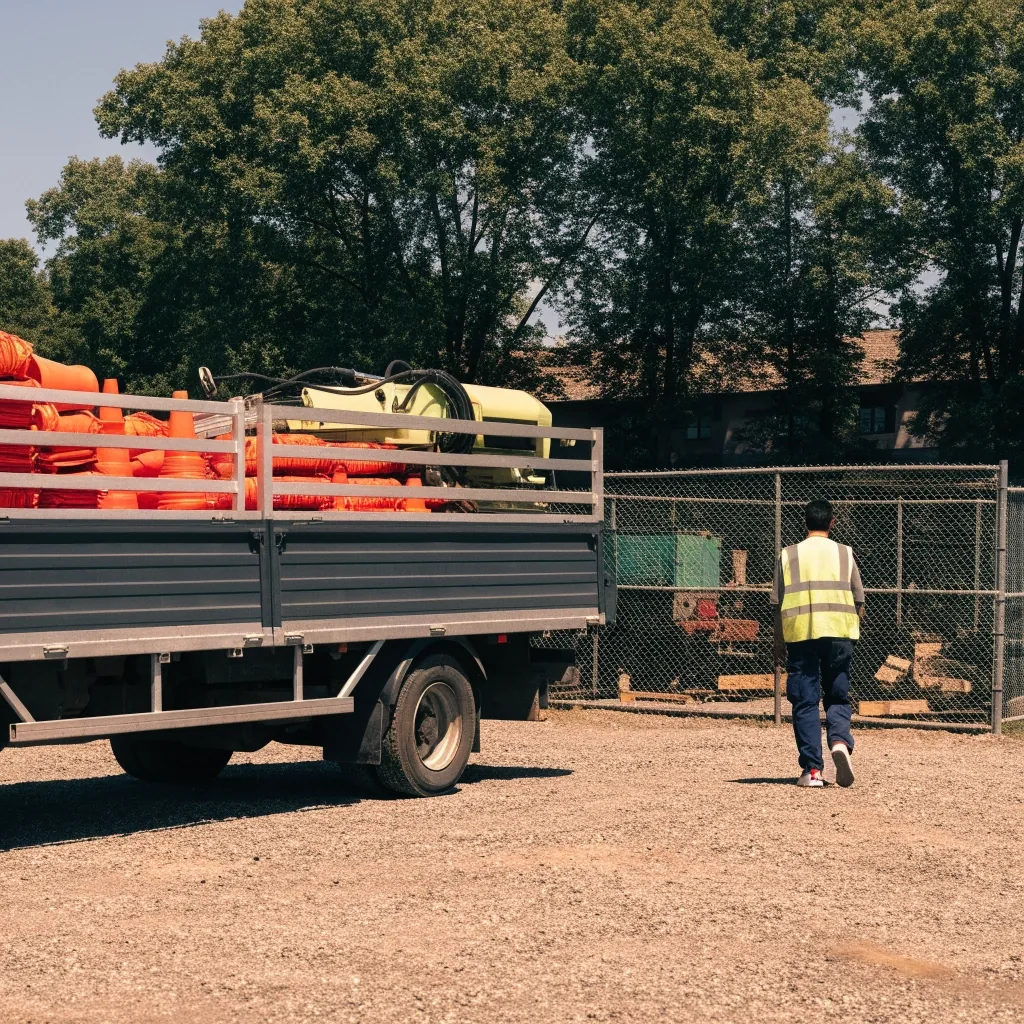
Maintenance yard with a boom-lift truck and cones beside a fenced equipment pen

Maintenance crews

Why the first customer is usually the agency, not the contractor

Sensing contracts tend to start with whoever owns the structure and carries the liability. Contractors working under them adopt the tool when the spec requires it — rarely before. That ordering shapes how fast a network like this spreads, and it explains why the company is emphasizing state-level coverage over single-site pilots.

Bundled cable across a row of wooden utility poles silhouetted against dusk sky

Adjacent market

The same hardware on the power side

Electric utilities inspect poles on their own long cycles and have the same problem. The hardware overlaps almost exactly; the procurement process does not.

Steel catenary mast base beside an empty rail platform in flat morning light

Slower horizon

Rail has the money and the caution

Rail operators buy slowly and test hard. Any expansion there will be visible in filings long before it is visible on a platform.

Five questions worth asking

When a sensing vendor pitches a public agency, these are the points that decide whether a deployment lasts past its first winter.

None of them require a technical background to ask, and all of them have answers that can be checked against a written contract rather than a slide.

  • Who owns the footage, and how long before it is deleted?
  • What happens to the feed when the structure is offline for maintenance?
  • Is a service call included in the subscription, or billed separately?
  • Can the agency pull its own data out if it changes vendors?
  • How is a flagged change reviewed by a licensed engineer?

Where the money stops being the story

Eleven and a half million dollars is enough to build out a regional network and enough to burn through in a bad year of hardware failures. What decides whether Torch Systems becomes a fixture on American roadsides is not the round size — it is whether a camera bolted to a pole in February is still reporting in August, and whether the person who reads the alert trusts it enough to send a crew.

The company's own numbers put hundreds of devices in the field across several states. That is a real base, and it is also the smallest sample that can prove or disprove the model. The next two years of service records will say more about this sector than any announcement will.

We will keep following the story — the reporting, the corrections and the coverage list all live on this site. If you work on infrastructure inspection and want to flag something we got wrong, the newsroom is reachable at the address below.

Frequently asked

What exactly is Torch Systems raising money for?

The company says the $11.5 million in total funding goes toward expanding its network of outdoor sensors — cameras and edge processors mounted on bridges, poles and roadside cabinets — along with the software that reviews what those devices capture.

How many devices are already deployed?

Torch Systems states that hundreds of its devices are running across several U.S. states. The company has not published a state-by-state breakdown, and this desk has not verified the count independently — we are reporting it as the company's own figure.

Does this kind of monitoring watch people?

The intended subject is the structure, not the street. Cameras pointed at public infrastructure can still capture passers-by, which is why retention limits, review access and whether images leave the device are the questions procurement teams are asking before signing. Those policies differ by jurisdiction.

Is this a New York story?

Partly. Torch Systems is headquartered in Brooklyn, and the city's own bridges and elevated roads are the kind of asset this technology targets. The current deployments the company describes stretch well beyond New York, but the company and the reporting are both local to us.

Where can I read the rest of our technology coverage?

The technology section collects our reporting on sensing hardware, data centers and the companies building them. The full archive carries everything published on this site, and the sections index lists every beat we cover.

Newsroom

Elisha Yong Journal

354 E 31st St, Brooklyn, NY 11226, USA

Desk hours

Monday to Friday, 9:00 AM – 6:00 PM

Send tips, corrections or documents to the newsroom address. We read everything.